
CELEBRITY
JUST IN: Bernie Sanders has introduced a bill banning presidents from naming federal buildings and any other asset after themselves. But Trump didn’t stay silent. His rapid response to Sanders came down to five chilling words that are now sending shockwaves across Washington.

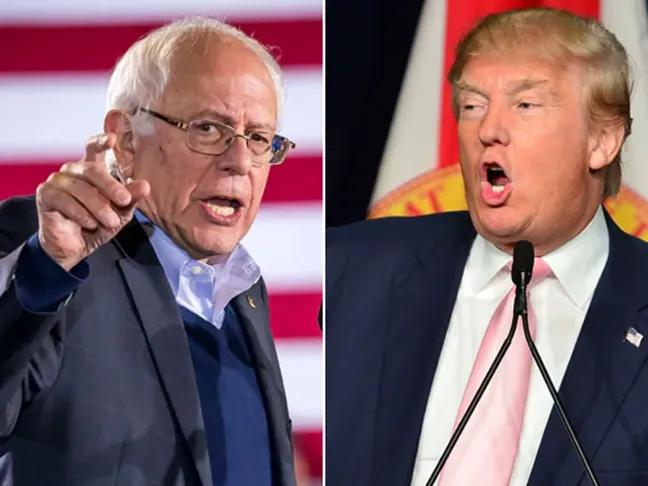
In a direct challenge to President Donald Trump’s recent renaming of major federal institutions, Sen. Bernie Sanders (I-Vt.) introduced the **Stop Executive Renaming for Vanity and Ego (SERVE) Act** on January 13, 2026.
The bill, co-sponsored by Sens. Chris Van Hollen (D-Md.) and Angela Alsobrooks (D-Md.), and supported by additional Democratic senators including Cory Booker, Adam Schiff, Ron Wyden, and Chuck Schumer, prohibits the naming or renaming of any federal building, land, or other asset after a sitting president.
It also bars the use of federal funds for such actions and applies retroactively to reverse recent changes, including the addition of Trump’s name to the John F. Kennedy Center for the Performing Arts (now referred to in some contexts as the Trump-Kennedy Center) and the U.S. Institute of Peace.
Sanders described Trump’s moves as “arrogant,” “narcissistic,” and “illegal,” arguing they echo authoritarian tactics by creating a “myth of the ‘Great Leader.’” He emphasized that public landmarks belong to the people, not individuals seeking self-glorification.
The legislation comes amid controversy over the Trump administration’s actions, which critics say violate existing federal laws governing these institutions and represent an unprecedented push toward personal branding on government property.
President Trump, however, did not remain quiet. His swift retort to Sanders and the bill boiled down to five chilling words: **”Make America Great Again Forever.”**
The phrase, interpreted by observers as a defiant declaration of enduring legacy-building, has sparked intense debate in Washington, with supporters viewing it as classic Trump bravado and opponents seeing it as further evidence of authoritarian tendencies.
The SERVE Act has been filed as an amendment to ongoing government funding legislation, setting the stage for a heated Senate debate in the coming days.
Whether it garners bipartisan support or faces a veto threat remains to be seen, but the clash highlights deepening divisions over presidential power and public symbolism in American democracy.

Taylor Swift’s Valentine’s Look Next to Travis Kelce Is Turning Heads Worldwide. See the Photos

Taylor Swift and Travis Kelce’s Valentine’s Date Has Fans SCREAMING — The Detail Everyone Missed

BREAKING: Taylor Swift Announces She Is Stepping Away from Music to Focus on a Future in Politics

Fans React Emotionally After Travis Kelce’s Unexpected Message Surfaces Online. See what he said

SHOCKING: Taylor Swift Stuns at the AT&T Pebble Beach Pro-Am in Head-Turning Luxury Outfit — Fans Say “This Is Next-Level Glam!”

Taylor Swift’s Noticeable Weight Loss at AT&T Pebble Beach Pro-Am Golf Tournament Is Causing Worries Right Now

Taylor Swift Spotted Cheering from the Gallery at Pebble Beach – Travis Kelce Almost Dropped His Club!

Something About Travis Kelce’s Latest Photo Feels Different — And Fans Can’t Stop Talking. Take a look

TAYLOR SWIFT REVEALED HER BABY BUMP IN A CUSTOM PEBBLE BEACH POLO

Travis Kelce’s Surprise Decision Leaves Fans Completely Stunned — Nobody Saw This Coming. Find out why

This Travis Kelce Clip Is Going Viral for All the Wrong Reasons — Did You Notice It Too?
